SAP Cloud Identity Services for AI Agents — The Two Models
A security reviewer asked me a simple question during an audit prep call: which account was this agent running as when it touched that invoice? I did not have a clean answer. Neither did the client.
That question used to be rare. It is not anymore. The moment an agent can read a record, approve a transaction or send an email on someone’s behalf, “which account was it using” stops being a technical curiosity and becomes the first thing an auditor asks.
SAP’s answer is to give agents proper identities, the same way it already does for people. The part almost nobody explains clearly is that there are two distinct ways it does this, they are not interchangeable, and picking the wrong one for the wrong agent is exactly how audit trails end up with gaps in them.
🔗 Foundation posts
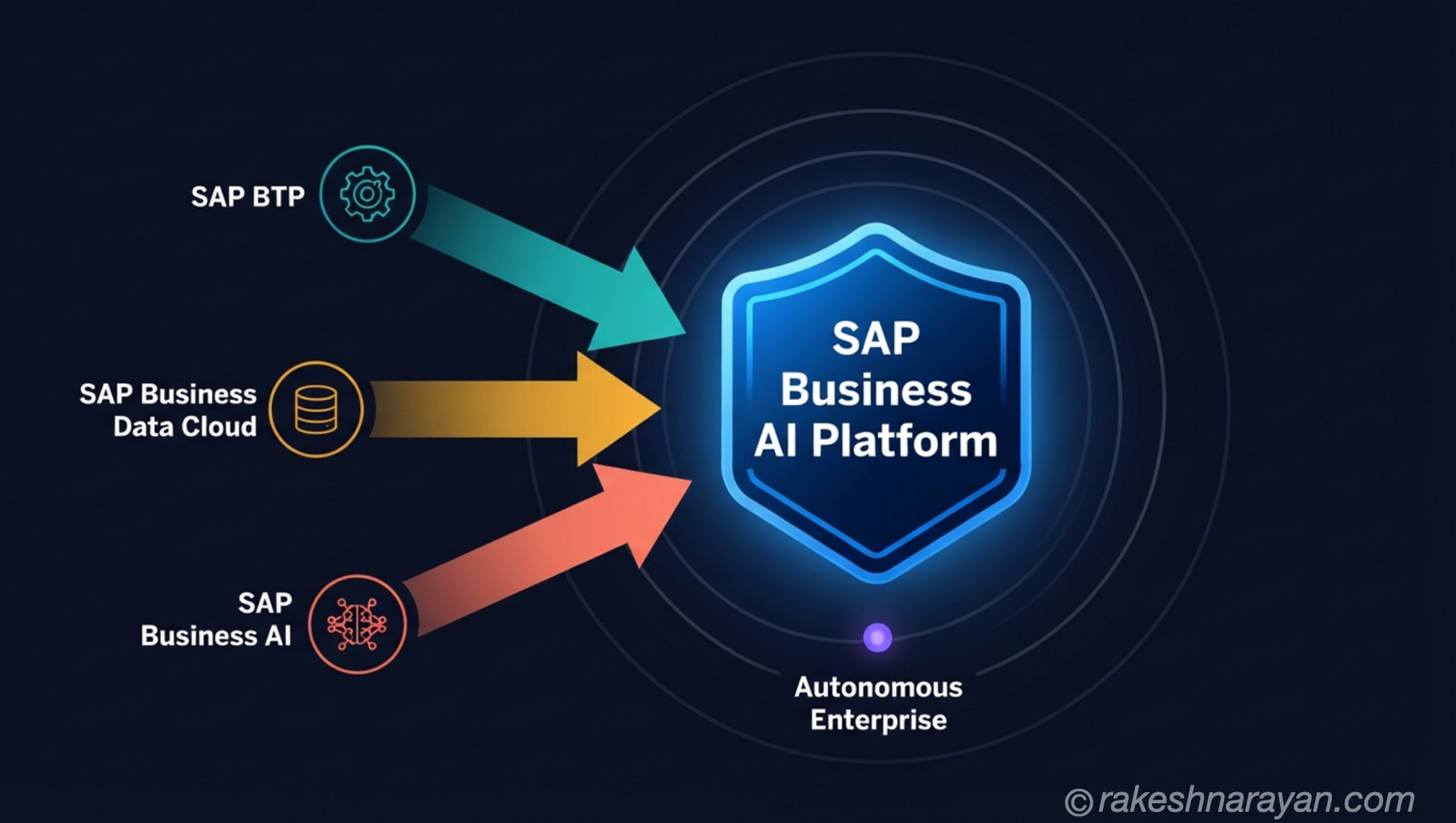
This post connects to SAP AI Agent Hub — Governance or Discovery? — the Hub handles agent lifecycle and inventory, while identity is the layer underneath that makes its audit trail trustworthy. It also connects to SAP Business AI Platform (BAIP) — BTP, BDC and AI Explained, since identity is one of the four pillars SAP’s Business AI stack already had in place before agents arrived. Neither is required reading for this post — both are worth a look if this topic is new to you.
Why agent identity isn’t optional anymore
For years, plenty of SAP shops ran service accounts and background jobs under shared technical users. Nobody loved it, but the blast radius was limited — a batch job either ran or it didn’t, and it did the same thing every time.
Agents break that assumption. An agent makes judgment calls, chains actions together and behaves differently run to run. Run that under a shared technical user with broad access and you have lost the ability to answer the one question every audit eventually asks: who — or what — actually did this.
The EU AI Act adds real pressure here, just not in the way most people currently assume. Article 50 transparency duties have applied since 2 August 2026 — any agent interacting with a person has to disclose that it is AI. The heavier machinery — Article 12’s tamper-evident logging and Article 26’s human-oversight duties for high-risk Annex III systems — was pushed back to 2 December 2027 by the Digital Omnibus, which entered into force in July 2026.
That is relief on the calendar, not on the substance. The same obligations still land, eighteen months later, and penalties for high-risk violations still run up to €15 million or 3% of global turnover once they do.
📝 Note
I am deliberately not turning this into a full EU AI Act compliance walkthrough — that deserves its own post, mapped article by article against SAP’s specific tooling, and I am writing it next. This section exists to explain why identity stopped being optional, not to be your compliance checklist.
Two ways SAP gives an agent an identity
SAP Cloud Identity Services supports two distinct operating models for agents, and the difference between them is the whole point of this post.
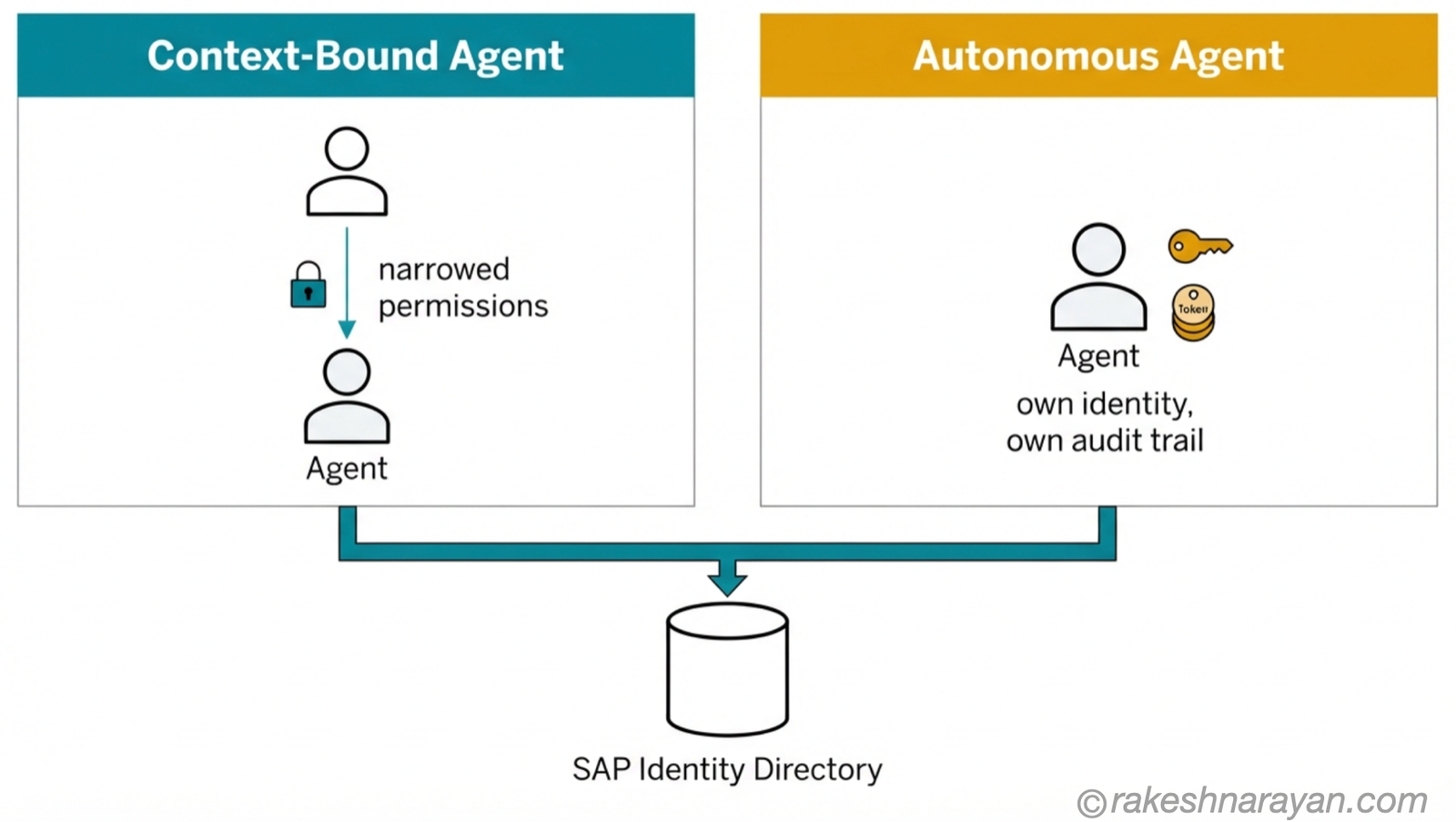
The first is a context-bound agent. It acts on behalf of a specific person, inheriting that person’s permissions but narrowed by agent-specific constraints layered on top. Think of an expense-approval agent working “as you” — it can see what you can see, but it cannot suddenly do more than the agent’s own restrictions allow, even though it is riding on your access.
The second is an autonomous agent. It is not tied to any human session at all. It gets its own dedicated technical identity, its own tokens, and its own audit trail, stored in the same Identity Directory as your human users — not a separate, bolted-on system for machines.
| Identity type | Who it acts as | Where its permissions come from |
|---|---|---|
| Human user | Themselves | Roles and authorisations assigned directly to them |
| Context-bound agent | A specific human, on their behalf | The human’s permissions, narrowed by agent-specific constraints |
| Autonomous agent | Itself, independently | Its own dedicated identity, tokens and permission set |
Get this choice wrong and you get one of two failure modes. Bind an agent to human context when it should be autonomous, and every action it takes muddies that person’s own audit trail with machine decisions they never made.
Make an agent autonomous when it should be context-bound, and you have handed it standing access that outlives any single task — the same over-provisioning problem SAP security has fought for decades, just with a new kind of user.
The Agent Gateway — where permissions actually get enforced
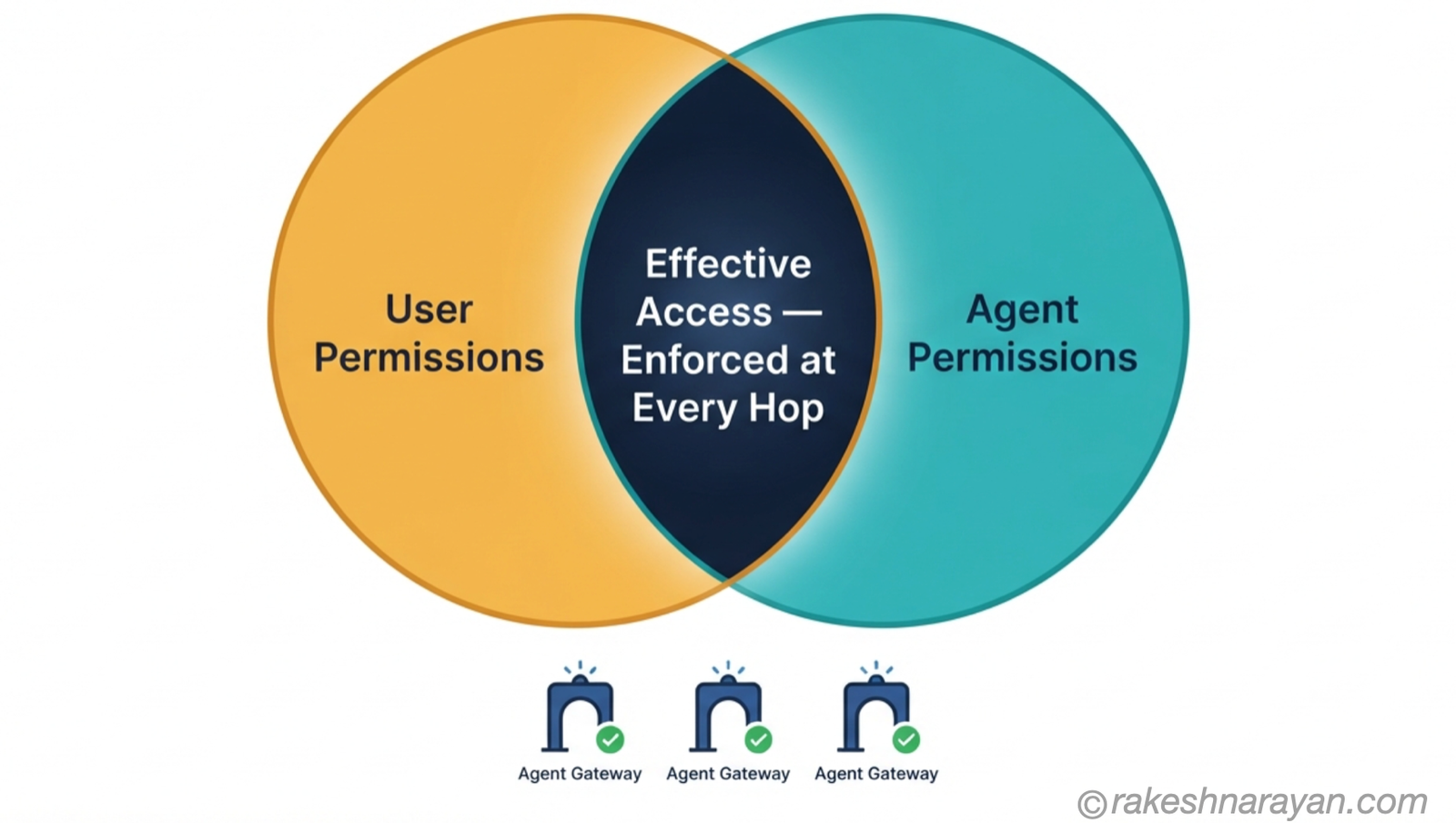
Here is the detail that surprises most people the first time they see it drawn out. Even for a context-bound agent, the agent does not simply inherit everything the human can do. The permission that actually applies at runtime is the intersection of what the human is allowed to do and what the agent itself is allowed to do.
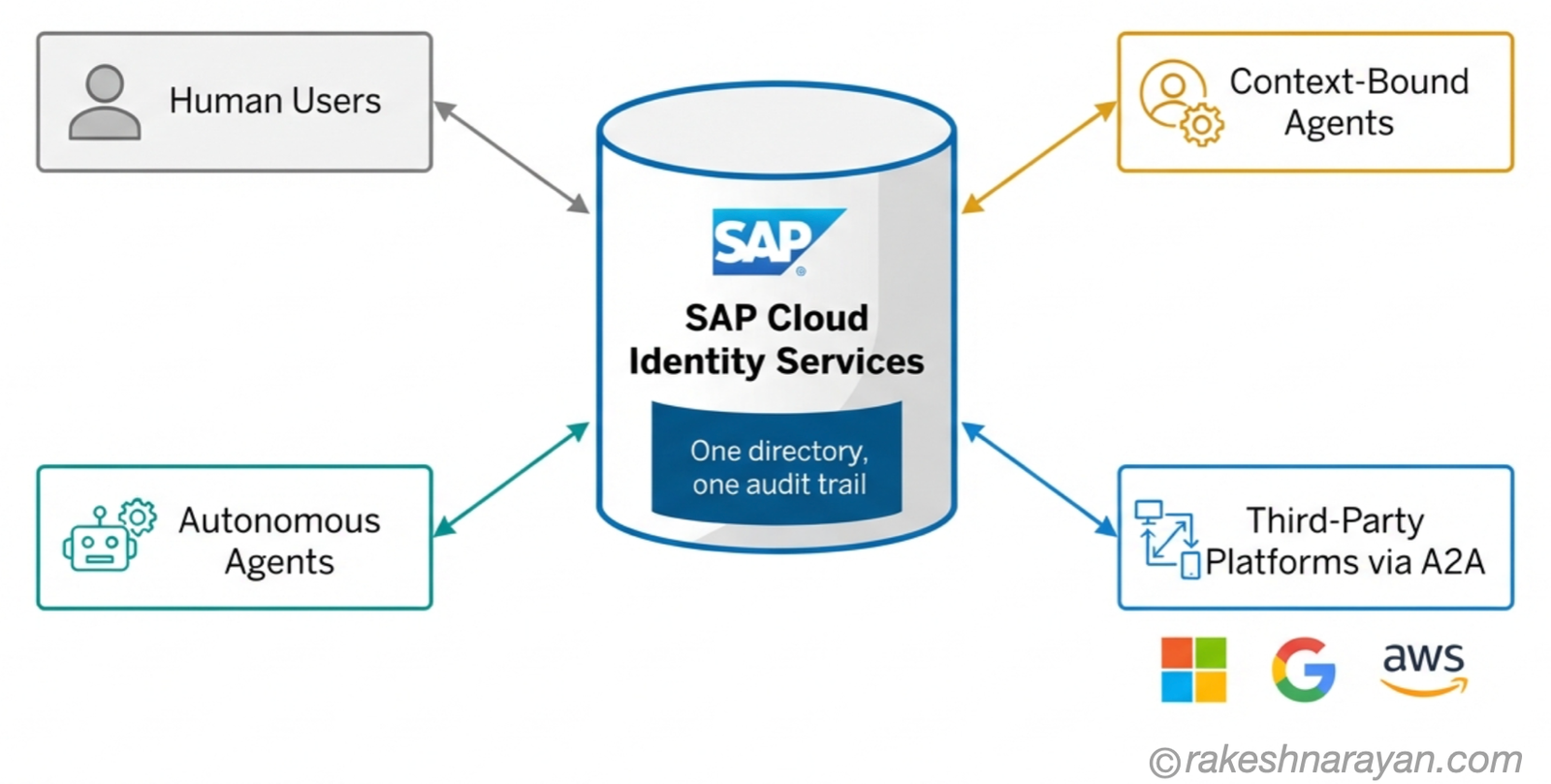
That intersection is checked by something SAP calls the Agent Gateway, at every single communication hop — not once at login, but on every call the agent makes. It is also the same gateway that handles inbound traffic from outside SAP entirely: when Microsoft Copilot Studio, Google Vertex AI or AWS Bedrock delegate a task to a Joule agent, that trust relationship is established through SAP Cloud Identity Services and enforced at the same gateway.
💡 Practical tip
When you design a context-bound agent, resist the urge to give it “read access to everything the user can see” as a shortcut. That shortcut is exactly what the intersection model is meant to prevent, and defining the agent’s own boundary explicitly — rather than relying on the human’s permissions to do the limiting for you — is what keeps the audit trail meaningful later.
SAP Cloud Identity Services as the identity hub
The design decision that matters most here is an unglamorous one: SAP did not build a separate identity system for agents. SAP Cloud Identity Services — the same service that already handles authentication, authorisation and identity federation for your human users — is the identity hub for agents too.
| What’s stored per identity | For a human user | For an agent |
|---|---|---|
| Directory record | Name, roles, group membership | Agent name, owning team, operation model (context-bound or autonomous) |
| Credentials | Password / SSO federation | Tokens, scoped and time-bound to the task |
| Audit trail | Login and transaction history | Every action, tool call and decision, timestamped |
One directory, one governance model, one place to look during an investigation — instead of a human IAM system on one side and a shadow inventory of agent credentials scattered across whichever platform built them on the other.
That consolidation is also why SAP’s pitch to enterprises leans so heavily on the rest of its stack: architecture already mapped through LeanIX, business processes already mapped through Signavio, and now identity for both people and agents in one place. Competing governance tools have to bolt that context on from outside; SAP is arguing it already has it.
Worth a mention in passing — some organisations already run Microsoft Entra ID as their primary identity governance layer and are extending it into SAP rather than adopting Cloud Identity Services natively. That is a legitimate architecture choice with its own trade-offs, but it is outside the scope of this post, which is about how SAP’s own model works when you use it as designed.
What identity does not solve
⚠️ Warning — identity answers who, not whether
A clean identity and a full audit trail tell you exactly who took an action. They do not tell you whether that action should have happened in the first place.
That is a policy and lifecycle question, not an identity one — it belongs to SAP’s separate agent governance tooling (the registry and approval workflow that tracks each agent from proposed through to retired) and to the policy enforcement Joule Studio and the underlying OpenShell runtime handle. Do not let a well-designed identity model give you false confidence that governance is fully covered.
Treat identity as the foundation the other controls sit on, not a replacement for any of them. An agent can have an impeccable identity, a perfect audit trail, and still take an approved-looking action that was, in business terms, the wrong call. Identity makes that action traceable. It does not make it correct.
At a glance — SAP Cloud Identity Services for AI Agents
| Concept | One-line summary |
|---|---|
| SAP Cloud Identity Services | The shared identity hub for both human users and AI agents — one directory, not two systems |
| Context-bound agent | Acts on behalf of a specific person; inherits their permissions, narrowed by agent-specific constraints |
| Autonomous agent | Has its own dedicated identity, tokens and audit trail, independent of any human session |
| Effective permission | The intersection of user permissions and agent permissions — never just one or the other |
| Agent Gateway | Enforces that intersection at every communication hop, including inbound traffic from Microsoft, Google and AWS via A2A |
| Audit trail | Every agent action is timestamped and logged against its own identity, not a shared technical user |
| EU AI Act tie-in | Article 50 transparency is live now; Article 12 logging and Article 26 oversight for high-risk systems were deferred to 2 December 2027 by the Digital Omnibus — identity is what makes both achievable when they land |
| What it doesn’t solve | Identity proves who acted. Whether the action was correct is a governance and policy question, not an identity one |
What to take away
Every other governance control you put around agents — the lifecycle in the Agent Hub, the approval gates, the audit review — depends on being able to answer one question reliably: who did this. Identity is the layer underneath all of it, and it is the layer people skip because it feels like plumbing rather than strategy.
It is not plumbing. Get the identity model wrong — bind agents to human context out of convenience, or make everything autonomous because it is simpler to set up — and every governance control built on top of it is answering the wrong question with confidence. Get it right, and “which account was this agent using” stops being a question that stalls an audit call.
Pick the model deliberately, per agent, based on what it actually does. That one decision, made early, is worth more than most of the policy documents that get written after the fact.
🔗 Related posts on this site
SAP AI Agent Hub — Governance or Discovery? — the lifecycle and inventory layer identity plugs into; read this first if you have not already.
SAP Business AI Platform (BAIP) — BTP, BDC and AI Explained — the three-layer platform this identity model supports.
AI in SAP: How Joule and Business AI Actually Work — Joule is the engagement layer for human-to-agent interaction referenced in the context-bound model.
Published on rakeshnarayan.com — Articles
URL: https://rakeshnarayan.com/articles/sap-cloud-identity-services-for-ai-agents-the-two-models/
Did you enjoy this article?
Let me know — it takes one click.
0 Comments
Leave a Comment
Looks like this one held your attention — I'd really appreciate a quick comment below.
Your comment has been submitted and will appear after review.